Quartzite Countertops in Myrtle Beach
The rare natural stone that pairs the toughness of granite with the soft, flowing veining of marble.
What Is Quartzite?
Quartzite is a metamorphic stone, which means it started as something else. It begins as sandstone, and over an immense period under intense heat and pressure deep in the earth, those sand grains fuse into a dense mass composed almost entirely of quartz crystal. That fusion is what makes quartzite exceptional. It ranks among the hardest natural stones used in countertops, harder than granite, and considerably harder than the engineered quartz it is so often confused with.
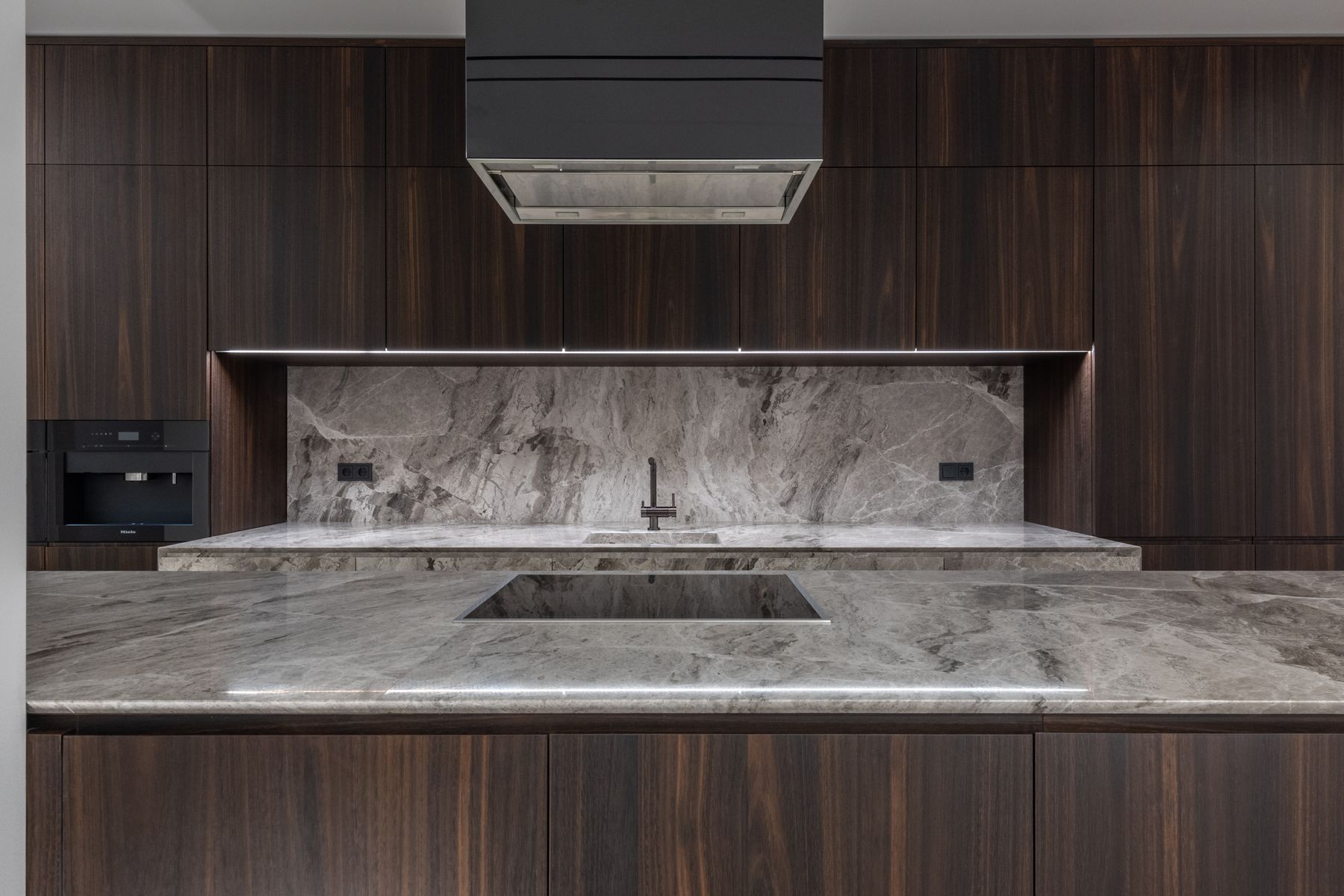
What makes quartzite unusual is that this toughness arrives in a stone that frequently looks like marble. Many quartzites carry the same soft veining and gentle color movement that draws people to marble in the first place, without marble's softness or its vulnerability to acid. For a homeowner who loves the marble look but cooks seriously, quartzite is often the honest answer.
Because each slab is genuine natural stone, no two are alike. If you are looking for quartzite countertops in Myrtle Beach that combine everyday durability with one-of-a-kind natural beauty, quartzite is one of the strongest options on the market today.
Why Homeowners Choose Quartzite
Exceptional Hardness
Quartzite ranks among the hardest natural stones used for countertops, standing up to daily kitchen wear, scratches and heavy use for decades. Its density is also why it takes more skill and more time to fabricate, which is part of what you are paying for.
Heat Resistant
Hot pans straight off the stove are no problem. Quartzite handles heat exceptionally well, which makes it a favorite for kitchens that get used hard. A trivet is still good practice, but heat is not a worry with this stone.
Marble’s Look Without Marble’s Fragility
Soft veining and subtle color movement give every slab a marble-like elegance, with shades running from bright whites and pale greys through beige, pink, yellow, blue, purple, orange and brown.
UV Stable
Unlike engineered surfaces, quartzite will not fade or discolor in direct sunlight, which makes it a strong choice for sunny Myrtle Beach kitchens and for covered outdoor spaces.
Natural and One-of-a-Kind
Every slab is unique. The veining that runs across your island exists in that arrangement exactly once.
Built for High Traffic
Quartzite is one of the few surfaces we recommend without qualification for a busy family kitchen that also needs to look elegant.
Where Quartzite Works Best
Quartzite's hardness makes it suitable everywhere, including areas that would be hard on a softer stone:
- • Kitchen countertops and islands
- • Bathroom vanities
- • Laundry and utility room counters
- • Fireplace surrounds
- • Staircases and thresholds
- • Wall caps
- • Shower seats
- • Table tops and desks
- • Covered outdoor kitchens
Finishes
Polished is the standard finish and brings out the depth of the veining. Honed and leathered finishes are available on many quartzites, though not all, since the specific stone determines what can be achieved. A leathered finish in particular suits quartzite well and does an excellent job of hiding fingerprints.
Caring for Quartzite
Quartzite is durable but it is still natural stone, which means it is porous and benefits from a sealer.
Everyday cleaning
Warm water and mild dish soap, or a stone-safe cleaner. Avoid ammonia, bleach and abrasive pads, all of which degrade the sealer.
Sealing
Quartzite is dense enough to be more stain resistant than most natural stone, but liquids can still work their way in if they are left sitting long enough. The water test tells you where you stand: sprinkle water on the surface, and if it beads, you are fine. If it soaks in and darkens the stone, it is time to reseal.
Spills
Wipe up promptly, particularly coffee, red wine, vinegar, citrus juice and strong detergents. A properly sealed quartzite gives you a comfortable margin, but no seal is permanent insurance.
Scratches
Most quartzite is highly scratch resistant, though a few varieties are softer than their reputation suggests. Use a cutting board, which protects the counter and preserves your knife edges.
Impact
Like any stone, quartzite can chip if something heavy strikes an edge or corner. Do not stand on your countertops, and take care around sink cutouts.
Common Questions
Is quartzite the same thing as quartz?
No, and this is the most common mix-up we see. Quartzite is a natural stone quarried from the earth. Quartz is engineered in a factory from crushed stone and resin. Quartzite is harder, handles heat far better and will not fade in sunlight. Quartz never needs sealing and offers more predictable color.
Is quartzite harder than granite?
Yes. Quartzite ranks among the hardest natural stones used in countertops, slightly harder than granite. In practical terms both are extremely durable, but quartzite has the edge.
Does quartzite need to be sealed?
Yes. It is dense and reasonably stain resistant, but it is still porous. Use the water test to check whether yours is due, and call us when it is.
Can I put hot pans on quartzite?
Yes. Quartzite handles heat very well. We still recommend a trivet as general practice, mainly to protect the sealer.
Why is quartzite more expensive than some other stones?
Two reasons. Good quartzite is less common than granite, and its hardness means it takes more time, more skill and more tooling to cut and finish. You are paying for a harder-to-work material and the craftsmanship it demands.
Can quartzite go outdoors?
Yes, and it is one of the better choices for it. Quartzite is UV stable and will not fade in direct sun, which is exactly what an outdoor kitchen in this climate needs.
See Quartzite Slabs in Person
Schedule a free consultation and let's talk about your project.
Get a Free Quote