Marble Countertops in Myrtle Beach
Timeless elegance and classic veining that has been prized in homes for centuries.
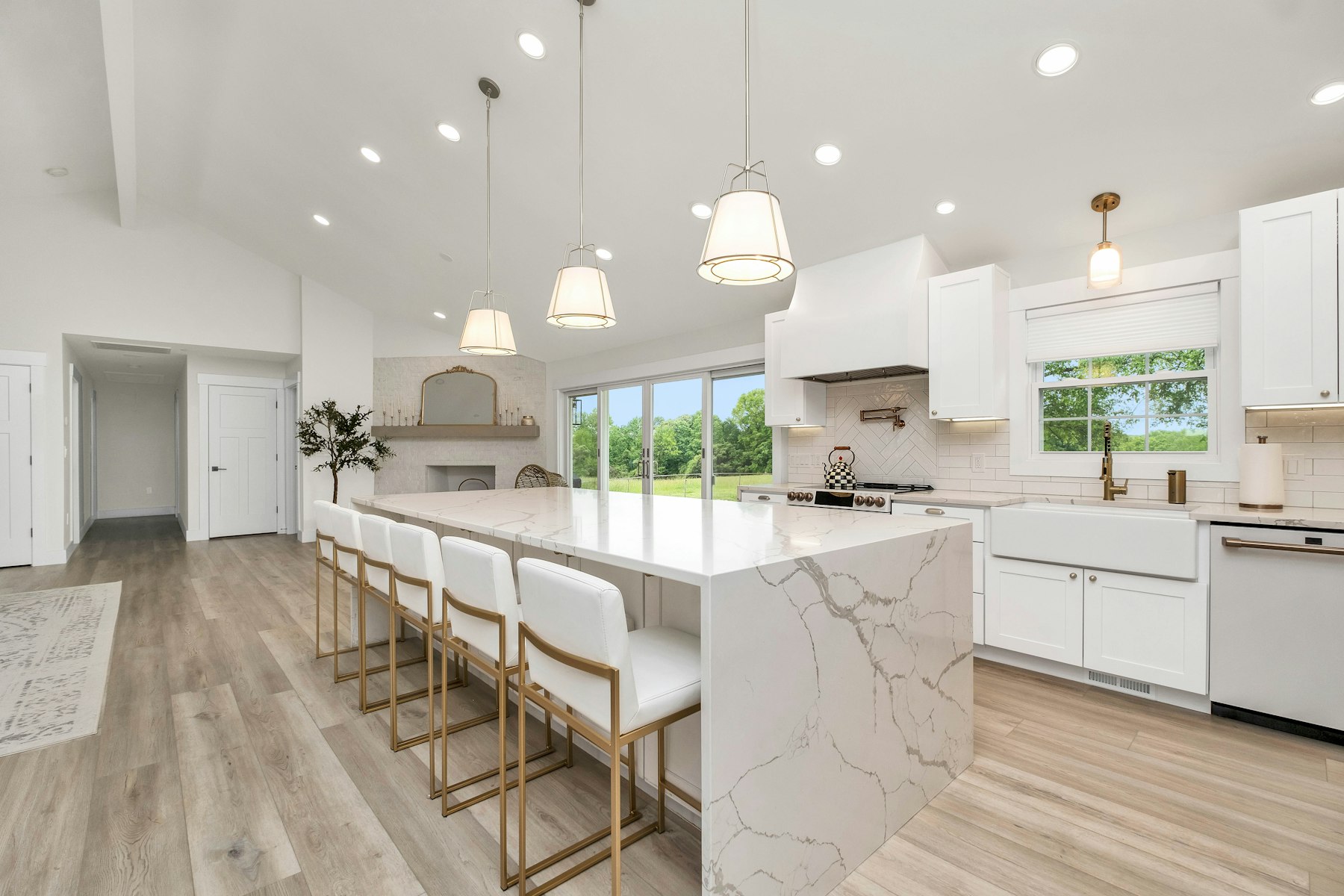
What Is Marble?
Marble is a metamorphic stone formed from limestone that has been transformed by heat and pressure over millions of years. That process is what produces marble's signature soft, flowing veins and its luminous, almost translucent surface, a look that has defined luxury interiors from ancient architecture through to modern kitchens.
Marble is composed largely of calcium carbonate, and that composition explains both its beauty and its particular demands. Calcium carbonate reacts chemically with acid, which is why marble behaves differently from every other stone we carry. It is also softer and more porous than granite, quartzite or quartz.
We want to be straightforward with you about this, because marble is the one material where expectation and reality most often diverge. Marble is beautiful and it can last a lifetime. It also asks more of its owner than any other surface we install, and it will develop a patina over the years rather than staying pristine. Many homeowners love that character. Some do not. Knowing which camp you are in before installation matters more with marble than with anything else.
Why Homeowners Choose Marble
Timeless Elegance
Few materials say luxury quite like marble. Its classic veining and soft color palette suit traditional and modern kitchens alike, and it has never gone out of style in several thousand years of use.
One-of-a-Kind Veining
No two marble slabs are alike. Every countertop we fabricate has its own unique pattern, so your kitchen is truly one of a kind.
Naturally Cool Surface
Marble stays cool to the touch, which is why it has long been the preferred surface for pastry and baking stations. If you bake seriously, this is not a small thing.
Handles Heat Well
Marble tolerates heat from cookware without scorching. A trivet is still best practice, but heat is not marble's weak point.
A Proven Classic
Prized for centuries in homes and landmarks alike, marble remains strongly associated with high-end interiors in the resale market.
Works as an Accent
Marble does not have to be everywhere to do its job. A single island or baking station in marble gives you the look while a tougher stone handles the hard-working runs.
Understanding Staining and Etching
This is the most important section on this page, and it is the thing we most want marble clients to understand before they choose. Staining and etching are two different problems, and people routinely confuse them.
Staining
A liquid soaks into the stone and leaves a discoloration. It is a porosity problem, and a good sealer largely prevents it.
Etching
Something acidic reacts chemically with the calcium carbonate in the marble and eats a microscopic amount of the surface, leaving a dull spot where the polish used to be. It is a chemistry problem, and here is the crucial part: sealing does not reliably prevent etching. A sealer slows absorption, but it does not stop an acid from reacting with the stone.
The everyday culprits are ordinary kitchen items: lemon and other citrus juice, vinegar, wine, tomato and ketchup, coffee, and strong or acidic cleaning products. A splash of lemon juice left on polished marble for a few minutes can leave a visible dull mark.
This is manageable. Wipe acidic spills immediately rather than eventually. Consider a honed finish rather than polished, since etch marks are far less visible on a matte surface. And go in expecting that a marble counter in a working kitchen will acquire some character over time.
Not All Marble Is Equally Delicate
The word marble covers a range of stones with meaningfully different durability, and this distinction can change the whole calculation.
True marble
The classic Italian, Brazilian and Indian marbles are the softest and most acid-sensitive. They are stunning, and they are the most demanding to live with.
Harder marbles
Certain stones sold as marble have a composition closer to quartzite and are considerably more scratch resistant and more forgiving. Fantasy Brown and Fantasy Blue are two well-known examples, and they hold up well enough that we are comfortable putting them in a working kitchen.
If you want marble in a kitchen rather than a powder room, this is the conversation to have with us. There is often a way to get the look you want in a stone that will tolerate your life.
Where Marble Works Best
Marble is at its best on surfaces that see moderate rather than punishing use:
- • Bathroom vanities
- • Fireplace surrounds
- • Accent islands and baking stations
- • Laundry room counters
- • Staircases, thresholds and wall caps
- • Shower seats
- • Table tops and desks
For full kitchen counters
We usually recommend one of two approaches. Either choose one of the harder marble varieties that tolerates daily use, or use marble as an accent, on an island or a baking area, and pair it with a tougher stone for the perimeter runs where most of the cooking damage happens. Both give you the marble look without setting yourself up for frustration.
Finishes
Marble comes in polished and honed finishes, and with marble this choice carries more weight than it does with other stones.
Polished
Gives you the deep, reflective, luminous look marble is famous for. It also shows etching most clearly, because an etch mark is essentially a dull spot in a glossy surface.
Honed
Matte, softer in appearance and considerably more forgiving. Etch marks and small scratches largely disappear into a honed finish. For a kitchen, we usually suggest honed.
Caring for Marble
Everyday cleaning
Warm water and mild dish soap, or a cleaner specifically labeled marble-safe. This matters more with marble than with other stone: many general-purpose cleaners are mildly acidic and will etch it. Never use vinegar, lemon-based cleaners, ammonia, bleach or abrasive pads.
Sealing
Marble needs resealing more often than harder stones, and the water test is the way to check: if water stops beading and starts soaking in, it is due. Remember that sealing addresses staining, not etching.
Spills
Immediately, not later. This is the single habit that determines how a marble counter ages.
Scratches
Marble is soft and scratches readily. Keep knives and coarse or sharp objects off the surface, never drag anything across it, and always use a cutting board.
Expect a patina
A marble counter that gets used will show its history. Many people find that this is exactly the appeal, in the same way a well-worn wooden table has character. If you want a surface that looks identical in ten years to the day it was installed, we will happily point you toward quartzite or quartz instead, and we would rather have that conversation now than after installation.
Common Questions
Is marble a bad choice for a kitchen?
Not necessarily, but it requires going in with clear eyes. True marble in a heavily used kitchen will etch and scratch over time. If that patina appeals to you, marble is wonderful. If it would bother you, either choose one of the harder marble varieties, use marble as an accent rather than throughout, or look at quartzite for a similar appearance with far more durability.
What is the difference between staining and etching?
A stain is a discoloration from liquid soaking into the stone, and sealing largely prevents it. An etch is a dull spot caused by acid chemically reacting with the marble surface, and sealing does not reliably prevent it. Etching is the issue people underestimate.
Can I put a hot pan on marble?
Marble tolerates heat well, so it will not scorch. Use a trivet anyway, as general practice for any stone counter.
How do I get rid of an etch mark?
Light etching on a polished surface can often be polished out, and we can advise on that. Prevention is far easier: wipe acidic spills right away, and consider a honed finish, which hides etching well.
Which marbles hold up best in a kitchen?
Harder varieties such as Fantasy Brown and Fantasy Blue have a composition closer to quartzite and handle daily use considerably better than classic Italian marbles. Come see them in person and we will show you the difference.
Is quartzite a good alternative to marble?
Very often, yes. Many quartzites offer similar soft veining and elegance with dramatically better hardness and no acid sensitivity. It is the first thing we suggest when someone loves marble but describes a kitchen that would punish it.
Schedule a free consultation and let's talk about your project.
Get a Free Quote